Has French modeling really changed? In 2026, around 45% of castings in Paris now specify “diversified profiles sought”. But behind this encouraging number lies a nuanced reality. Between avant-garde campaigns and practices that are still rigid, the sector is going through a profound transformation whose codes you must understand.
Whether you are a model looking for your place in this changing industry, a brand that wants to reflect current society, or simply curious about the evolution of the sector, this article deciphers the real state of diversity in modeling today. Quantitative data, field testimonies, and concrete solutions to navigate this new landscape.
On the program:
- The evolution of beauty standards since 2020
- Plus size models: from niche to mainstream
- Senior models: the silver marketing boom
- Ethnic diversity and real representation
- Disability and visible differences: where do we stand?
- How platforms like Shaare Agency facilitate inclusion
The new beauty standards: break or continuity?
What has really changed since 2020
The numbers speak for themselves. The Parisian castings of 2026 present 3 times greater diversity to those of 2019. Of the 2000+ French advertising campaigns analyzed in 2025, 62% included at least one non-traditional model (vs 23% in 2019).
This evolution is not the result of chance. Three factors accelerated the movement:
Regulatory pressure first. The law against excessive retouching of advertising images, strengthened in 2024, now requires visible mention. Brands anticipate and focus on authenticity right from the shoot.
Then there is the consumer requirement. Those under 35 overwhelmingly reject ads deemed “unrealistic”. A CSA 2025 study reveals that 73% of millennials and Gen Z are actively boycotting brands with unrepresentative campaigns.
Marketing performance at last. Inclusive campaigns generate a 40% higher commitment on Instagram and TikTok. Marketing directors understood: diversity is no longer a “nice to have” but a business lever.
What still resists
However, bastions remain. 85% of Parisian high fashion remains faithful to classic measurements (1m77-1m82, size 34-36). The September 2025 Fashion Week shows only had 12% of plus size or senior models.
Luxury advertising modeling also maintains strict criteria. Out of 100 jewellery/perfumery campaigns analyzed, 78% had “conventional” profiles. Luxury homes are evolving slowly, fearing to blur their image of exclusivity.
This duality creates two parallel markets: inclusive and dynamic commercial modeling, and prestige modeling that is still conservative. Understanding these criteria is essential to know where to position your profile.
Plus size models: from tokenism to standardization
Growth figures
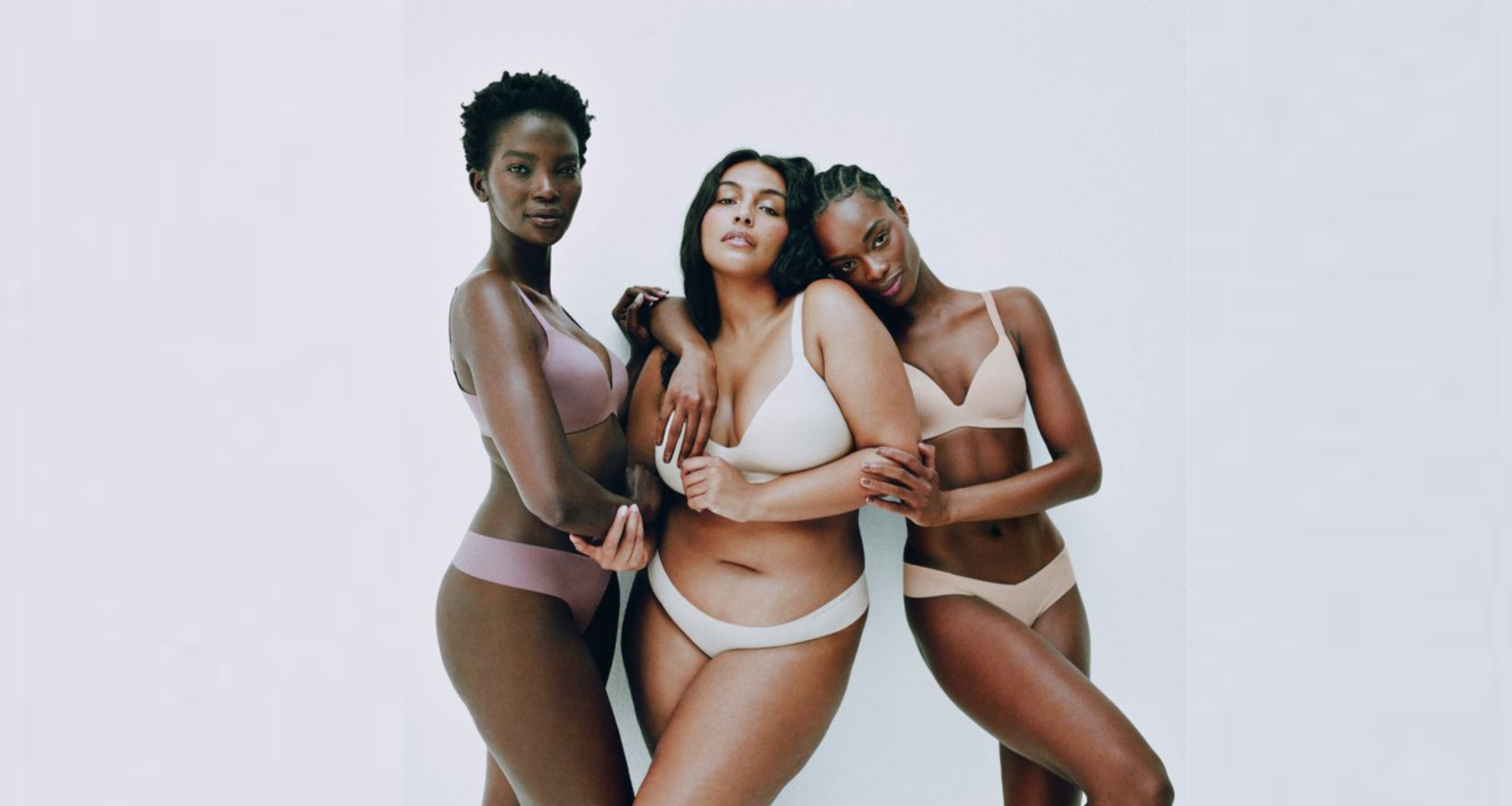
The plus size modeling (sizes 42-52) is experiencing remarkable expansion. The French market currently has around 3500 active professional plus-size models, compared to 800 in 2020. This multiplication by 4 reflects real demand.
The driving sectors? Lingerie in the lead, with 68% of campaigns including sizes 44+. Sportswear fashion follows, with Decathlon and Nike having generalized castings “for all body types”. Accessible ready-to-wear (Kiabi, Undiz, Etam) is recruiting massively.
Rates are gradually aligning. A confirmed plus-size model now charges €400-700 for a half-day shooting, which is the equivalent of traditional standards. Gone are the days when plus size was systematically underpaid.
Testimonial: Léa, 29, plus size model in Paris
“I started in 2022. At the time, I answered 10 castings to get 1 booking. Today, I work 12-15 days a month. Brands contact us directly via platforms like Shaare Agency where our visibility is equal to other profiles. The difference? They actively seek diversity instead of condoning it.”
Léa's career illustrates this standardization. Large-scale specialized agencies (Pulp Models, Bella Agency) are multiplying, but above all, generalist agencies are opening curve departments.
The current limits
However, be careful not to overestimate progress. If plus-size e-commerce modeling explodes, the show remains closed. Out of 450 Paris 2025 Prêt-à-Porter shows, only 34 included sizes 44+. High-end houses struggle to adapt their samples.
Over-sexualization remains a pitfall. Too many plus-size campaigns limit models to lingerie or swimsuits, perpetuating the “sexy-only” cliché. Streetwear or business fashion castings remain rare.
Senior models: silver marketing is booming
A market that has long been ignored
Les senior models (45-75 years old) represent the fastest growing segment. +180% demand between 2023 and 2025. The reason? France has 20 million people aged 50+ who hold 60% of purchasing power. Brands are finally targeting this lucrative target.
Growth sectors: anti-aging cosmetics (L'Oréal, Clarins), insurance/banking (AG2R, Groupama), premium tourism, and casual chic fashion. Brands like Comptoir des Cotonniers or Eric Bompard have made seniors their identity.
In terms of remuneration, senior modeling pays well. An experienced 55-65 year old profile charges €500-900 per half-day. Less competition and more professionalism explain these solid rates.
Testimonial: Philippe, 62, model for 4 years
“Former sales director, I started out of curiosity in 2022. Today, I shoot 8-10 days a month for car brands, men's fashion and travel. My professional book highlights my naturalness and my assumed gray hair. Art directors are looking for authenticity, not forced youth.”
Philippe embodies this generation of active, elegant seniors who are comfortable in front of the camera. Her profile is exactly what brands are looking for: credibility and aspiration simultaneously.
The brakes to be removed
Senior modeling is still suffering from insufficient offers. Only 6 agencies in Paris have a structured senior department. A lot of brands want 50+ profiles but don't know where to look.
There is also a lack of training. Unlike young models who are coached from the age of 18, seniors often improvise themselves. Posing workshops, light comprehension, camera ease: these skills are acquired. Digital platforms like Shaare Agency partly compensate, offering visibility and direct access to brands.
Ethnic diversity: numbers and reality
Measurable but insufficient progress
Ethnic representation in French modeling is showing progress. The 2025 castings have around 28% of racialized models (vs 14% in 2020). Paris, a multicultural city, is more reflected in its advertisements.
Cosmetic campaigns have led the way. Fenty Beauty (Rihanna) forced the industry to offer 40+ shades of foundation. Consequence: the need for models with varied skin tones to test and promote products.
Streetwear and urban fashion are excellent in this regard. Nike, Adidas, and the French brands Korotché or Maison Château Rouge place diversity at the heart of their DNA. Their castings reflect real France.
The persistent blind spots
French luxury fashion is lagging behind. Out of 80 campaigns analyzed (Hermès, Chanel, Dior, Vuitton), only 11% featured a racialized model in the forefront. Luxury remains attached to a Eurocentric aesthetic.
Tokenism is on the lookout. Some brands systematically place a black or Asian model to “check the diversity box” without real editorial thought. This instrumentalization is evident and elicits justified criticisms.
Natural hair is still a struggle. Black models testify: 60% of castings still require straightening or extensions. Afro natural textures struggle to impose themselves outside specialized hair campaigns.
Disability and visible differences: the ultimate border
Timid advances
The Disability modeling remains an ultra-minority but is emerging. Tommy Hilfiger, Zalando and a few pioneers incorporate models in wheelchairs, visible prostheses, or morphological differences. The numbers? Less than 2% of French castings include a model with a disability.
Zebedee Management, a specialized British agency, inspires French initiatives. Some Parisian agencies are opening “capacity diversity” departments. The movement was born but remained confidential.
The driving sectors: adaptive fashion (clothing adapted to disabilities), cosmetics (acne campaigns, vitiligo), and corporate communication (employer diversity). Mainstream brands are still hesitant.
Why is it so slow
Three major obstacles slow down the inclusion of disability in modeling.
Mental representation first. Modeling is still associated with “physical perfection.” Integrating disability forces us to deconstruct this fantasy. Brands fear consumer misunderstanding.
Then there are the technical constraints. Photo studios that are rarely accessible to people with reduced mobility, sustained rhythms that are unsuitable for certain disabilities, lack of training advisors. The industry is not equipped.
Finally, the reputational risk. Brands fear accusations of instrumentalization or clumsiness. Some marketing managers think it's better to do nothing than to do it wrong. This reluctance paralyzes.
Testimonial: Inès, 26, vitiligo model
“My vitiligo covers 40% of my body. I was refused 50 times before my first campaign in 2024. Today, I work for cosmetic and fashion brands that make a difference. Creating a book that values my particularity rather than masking it changed everything. Art directors are looking for authenticity.”
Inès' journey shows that the path exists, but that it requires perseverance and assertive positioning. Models with differences must build a strong identity around their particularity.
The role of digital platforms in inclusion
Democratization of access
Platforms like Shaare Agency are transforming fashion model recruitment. Launched in January 2026, the platform offers equal visibility to all profiles: large size, senior, standard, ethnic diversity. No algorithmic prioritization based on physical criteria.
Concretely? A plus-size senior model appears in search results with the same probability as a standard 25-year-old profile. Brands filter by location, not by compliance with old codes.
This technical neutrality promotes inclusion. Traditional agencies pre-select according to their standards. Platforms present, brands choose. Decision-making power is moving.
Testimonial: Camille, artistic director at a ready-to-wear brand
“Before, we always contacted the same 3 Parisian agencies that offered us similar profiles. Since using Shaare Agency for our model castings, we have been discovering talent off the radar. Our last campaign featured 4 models: plus size, tattooed, Asian, and a more classic profile. Instagram engagement jumped by 85%.”
Camille's experience illustrates the business impact of diversity. Platforms facilitate creative audacity by simplifying access to varied profiles.
Diversity and inclusion: a manual for models
Building a differentiating positioning
If you represent a “minority” in modeling (large size, senior, disability, atypical characteristics), transform this particularity into a strength.
Step 1: Identify your niche Which brand naturally targets your profile? Mature cosmetics for seniors, plus size lingerie for curvy body types, streetwear fashion for urban style. Analyze existing campaigns, identify pioneer brands.
Step 2: Create a targeted book No photos “despite” your difference, but “thanks to” her. A plus-size model shows off her body with pride. A senior takes responsibility for his wrinkles. This authenticity seduces artistic directors in search of credibility.
Step 3: Multiply channels Specialized agencies + digital platforms + direct network. Do not rely entirely on traditional agencies that remain selective. Shaare Agency, professional social networks (LinkedIn), direct contact with brands expand your opportunities.
Fatal mistakes to avoid
Mistake 1: Underestimating your worth Practicing rates aligned with the market. Your particularity is not a disadvantage justifying a discount. A shoot is a shoot. If the brand wants you, it pays the market price.
Mistake 2: Accepting humiliating castings Some brands are looking for the “big joke” or the “cliché granny”. Refuse degrading roles. Your dignity is not negotiable. True inclusion respects, it does not instrumentalize.
Mistake 3: Neglecting professionalism Diversity does not mean excellence. Punctuality, physical preparation, mastery of posing, impeccable customer relationship. Professionalism is your best argument.
Diversity and inclusion: a guide for brands and recruiters
Why integrate diversity (really)
Beyond moral posture, diversity is a measurable business driver.
Proven advertising ROI Inclusive campaigns generate +40% social media engagement, +25% in advertising memorization, and +18% in purchase intent (Kantar 2025 study). Consumers love mirror brands.
Target expansion A senior model attracts people aged 50+, a plus-size profile reassures real morphologies, ethnic diversity speaks to multicultural France. Each profile opens a segment.
Competitive differentiation In a saturated market, inclusion becomes a strong identity marker. Early adopters (Fenty, Asos, Levi's) capitalized on their lead. The latecomers seem out of date.
How to recruit inclusive effectively
Tip 1: Explain the intent In your casting briefs, specify “we are actively looking for diversity”. Agencies and platforms will understand and offer broad. Blur creates a standard by default.
Tip 2: Diversify sources Do not only contact the 2-3 historical agencies in Paris. Use platforms (Shaare Agency), specialized agencies (Pulp, Bella for large size), inclusive casting calls. Multiply the channels.
Tip 3: Briefing the teams Photographer, stylist, makeup artist need to understand the intention. A senior model deserves the same flattering light as a 25-year-old. A large profile requires adapted styling. Inclusion is collective.
Tip 4: Test and measure Compare the performance of inclusive vs traditional campaigns. Commitment, conversion, reputation. Factual data will convince reluctant decision makers.
Conclusion: Is 2026 a pivotal year for inclusive modeling?
The French modeling of 2026 is no longer that of 2019. Diversity is undeniably increasing : +45% of inclusive castings, explosion of plus size and senior modeling, ethnic representation on the rise. Digital platforms democratize access, brands measure positive ROI, mentalities are changing.
But resistance remains. Haute couture still frozen, persistent tokenism, ultra-minority disability. The path is marked, not finished.
For non-standard models : your time has come. Build a strong positioning, multiply visibility channels, demand respect and dignified rates. Brands are looking for you.
For brands and recruiters : inclusion is no longer optional. Your consumers want it, your competitors adopt it, your business benefits from it. Move from good intentions to measurable action.
Concrete next steps
Mannequins:
- Create a book that assumes and values your particularity
- Candidate on Shaare Agency to develop your visibility
- Active network on LinkedIn with cutting-edge artistic directors
- Set rates in line with the general market
Brands:
- Audit your last 10 campaigns: what is the real diversity rate?
- Write explicitly inclusive casting briefs
- Explore model platforms in Paris offering native diversity
- Measure the ROI of your inclusive vs classic campaigns
The modeling industry is reinventing itself. Those who embrace this mutation take advantage of it. Those who resist are marginalized. It's up to you to choose sides.