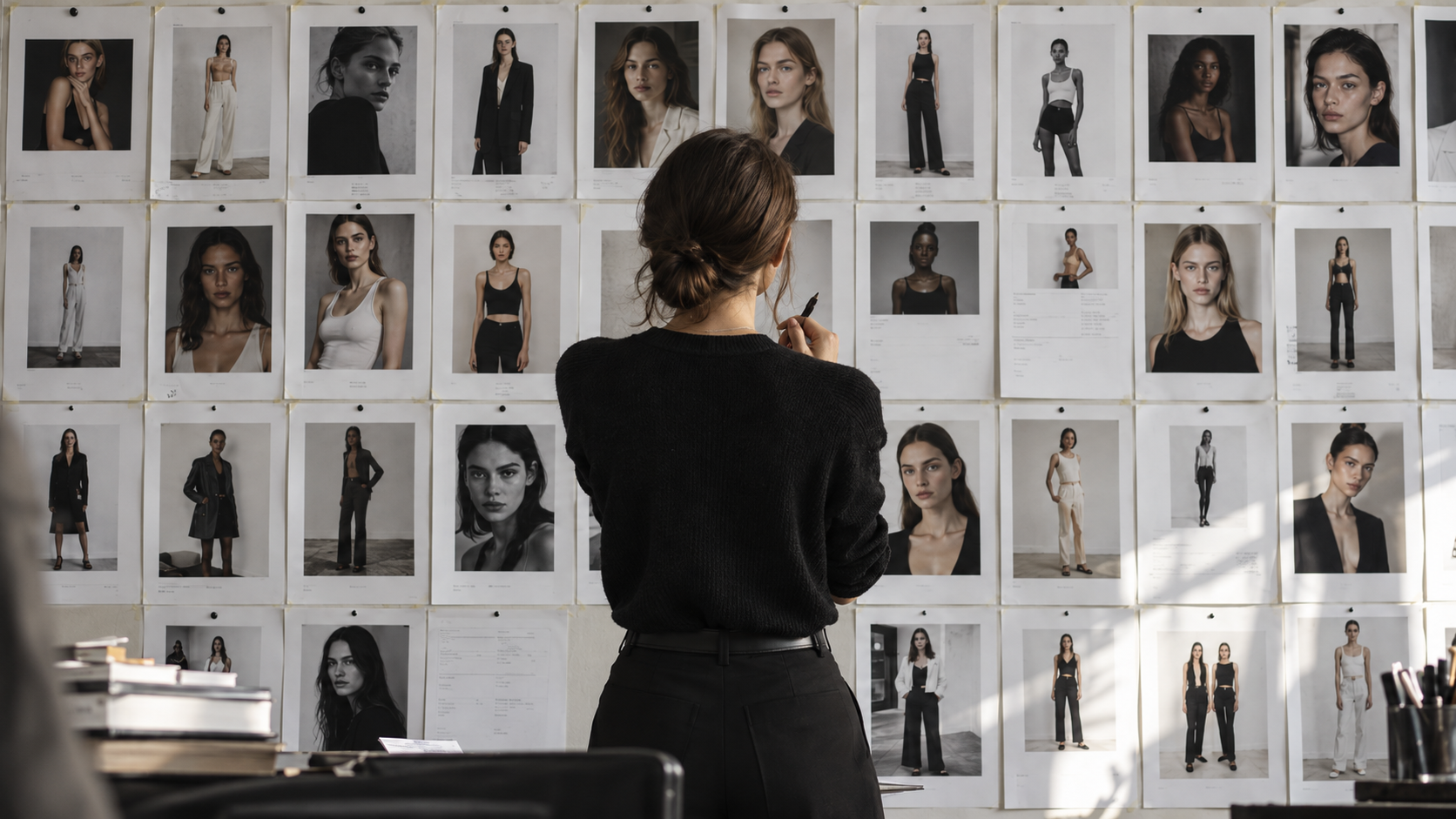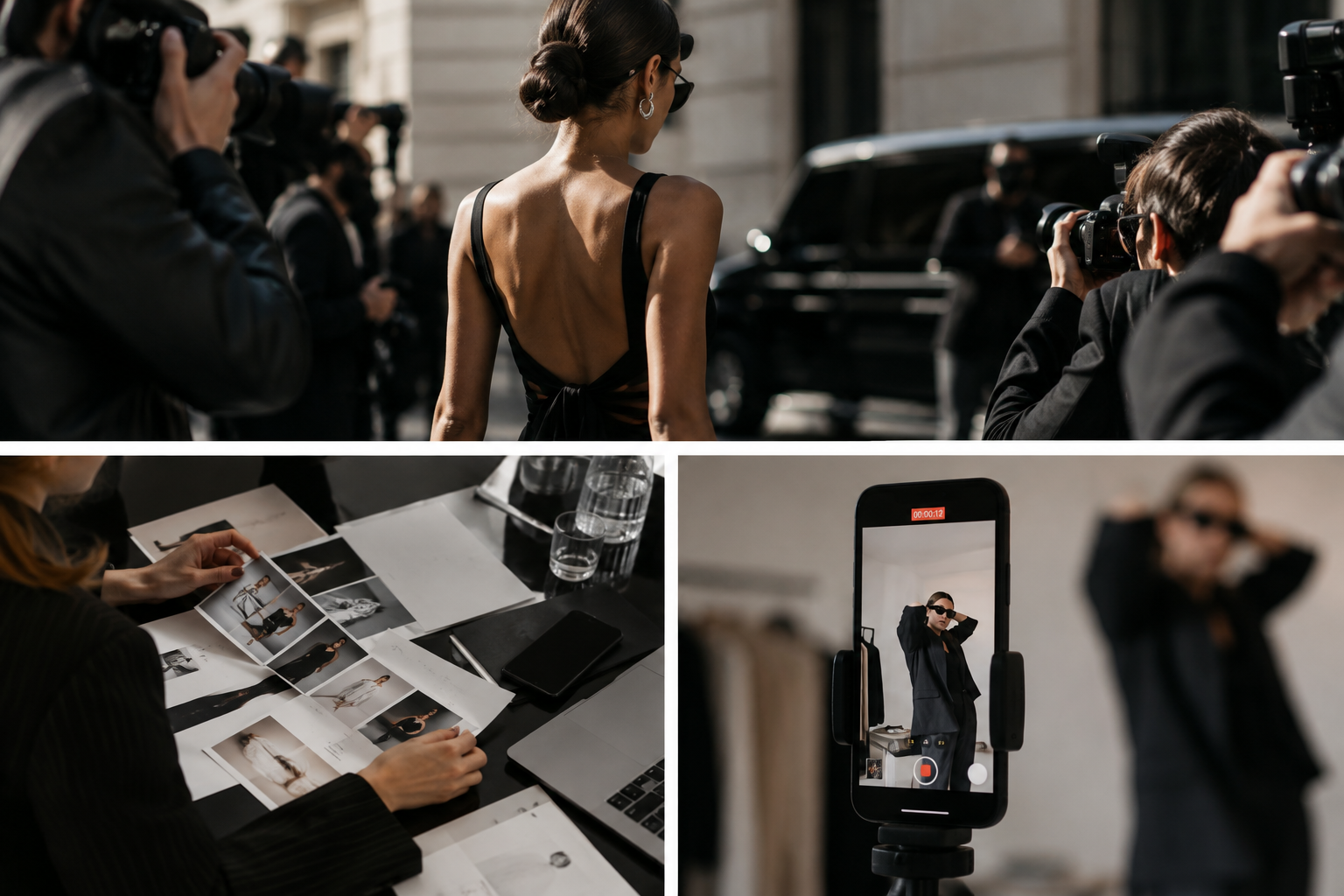

Artificial intelligence is revolutionizing fashion photography. In 2026, tools like Midjourney, DALL-E 4, and Stable Diffusion generate hyperrealistic images in seconds. Automatic retouching rivals the best Photoshop retouchers. Virtual shootings populate Instagram with models who don't exist.
Faced with this technological revolution, one question obsesses every fashion photographer: Will AI replace my job ? The answer is not simple or binary. AI is profoundly transforming the sector, destroying some market segments, but creating completely new ones.
This article analyzes the 2026 trends in a cool way, deciphers the real impact on the fashion photographer profession, and identifies concrete adaptation strategies to thrive in this new era.
On the program:
- State of play: what AI can really do in 2026
- Quantified impact on the fashion photography market
- What AI will never replace (the irreplaceable human)
- 5 strategies to adapt and thrive
- The role of authentic talent platforms (Shaare Agency)
AI in fashion photography 2026: a factual state of affairs
Image generation: Midjourney and DALL-E go beyond realism
The tools of AI-powered image generation crossed a critical quality threshold in 2025-2026. Midjourney v7 (released December 2025) and DALL-E 4 (March 2026) produce fashion visuals that are almost indistinguishable from real professional photos.
Concrete current capabilities:
- Hyperrealistic mannequin generation (faces, morphology, natural expressions)
- Clothing rendered with realistic materials, textures, and falls
- Complex studio lights (softbox, backlight, golden hour)
- Creative compositions respecting fashion codes (framing, poses)
- Multi-image coherence (same model, same atmosphere on 10-20 visuals)
Continuing limitations:
- Hands/feet still imperfect (60% of generations have anomalies)
- Embedded text (logos, fonts) often illegible or distorted
- Complex physical interactions (several models, accessories)
- Unconvincing dynamic movements (parades, action shots)
- Difficult brand coherence (reproduce the precise visual identity of a house)
Cost: Midjourney Pro = 60/month for unlimited generations.
DALL−E4=0.04 per high resolution image.
Compare to traditional fashion photographer rates : 500-4,000 € per shooting.
Automatic retouching: Lightroom and Photoshop integrate AI
Adobe has massively integrated AI into its business tools. Lightroom 2026 offers “Auto-Enhance AI” which analyzes and fixes exposure, colors, composition in 2 seconds. Photoshop “Neural Filters” allows skin retouching, remodeling, morphology, and background changes with a simple text prompt.
What retouching AI does very well:
- Global color corrections (white balance, saturation)
- Instant accurate topic/background clipping
- Basic skin retouch (blemishes, even skin tone)
- Removing unwanted elements (electrical wire, panel, loop)
- Extending/filling backgrounds (generative fill)
What it does hurt:
- High definition beauty retouching (frequency separation, subtle dodge & burn)
- Natural morphological adjustments (invisible professional liquify)
- Brand aesthetic coherence (artistic direction, specific visual tone)
- Retouching creativity (unique effects, complex composite)
Business impact: Repetitive, low-value tasks (trimming e-commerce products, basic corrections) can be automated. High-quality creative retouching remains a human domain.
Virtual shootings: 3D models and sets
Platforms like Lalaland.ai, The Fabricant, or DressX offer “100% virtual fashion shootings”. Upload your garment (flat product photo), the AI drapes it onto a hyperrealistic 3D mannequin of your choice, in a configurable virtual setting.
Advantages of virtual shootings:
- Ridiculous cost: 50-200 € vs 2000-5000 € real shooting
- Extreme speed: 24-48 hours vs 2-3 weeks full cycle
- Infinite mannequin diversity (morphologies, ethnicities, ages)
- Zero logistical constraints (no team, rental, travel)
- Ultra-fast modifications (change scenery, mannequin, post-generation pose)
Critical limitations:
- Zero authenticity (consumers are increasingly detecting the artificial)
- Impossibility to actually show the material/texture of the garment
- Unconvincing tissue movement/fluidity
- No emotional storytelling (human connection absent)
- Emerging regulation (AI content transparency obligation in Europe 2026)
Target market: Fast-fashion, e-commerce, pure players, tight budget. Luxury and premium brands massively favor authentic shootings.
Quantified impact on the fashion photography market
Segments under threat: basic e-commerce and simple retouching
Some segments of the fashion photo market are indeed undergoing major disruption by AI.
Basic product e-commerce:
- Drop in demand for photographers: -35% on the simple packshots segment (2024-2026)
- Customers migrating to IA: pure players, marketplaces, small brands (<500K€ CA)
- Pressure rates: e-commerce photographers have reduced prices 15-20% to remain competitive
Outsourced basic retouching:
- Offshore retouching studios (India, Philippines) lose 40-50% volume
- Automated tasks: clipping, standard color corrections, batch resizing
Low-cost shooting lookbooks:
- Emerging brands are testing virtual alternatives for test collections
- Volume shootings lookbooks <1500€ down 20%
Ultra-resistant segments: luxury, campaigns, authenticity
Conversely, some segments are perfectly resisting or even strengthening.
Luxury/premium photography:
- Continued growth +8% annually (2024-2026)
- Reasons: authenticity = major added value, human know-how = storytelling
- Hermès, Chanel, Dior, Louis Vuitton: 100% real photo shootings, average budget +12%
Brand advertising campaigns:
- Stable or even growing demand for renowned photographers
- Complex creative brief, artistic direction, emotion = exclusive human domain
- Campaign rates (3000-10000+) maintained
Professional model books:
- Stable volume: model agencies require authentic real photos
- Reason: end customers (brands) want to see physical reality mannequin
- Shaare Agency & agencies in Paris: demand for photography books supported
Editorial/magazine content:
- Vogue, ELLE, Marie Claire: 95% real shoot content
- Editorial authenticity = differentiation from generic AI content
2026 figures: bipolarised market
The French fashion photography market is divided into two distinct blocks:
LOW segment (budget <1000€/shoot):
- Total volume: -25% vs 2023
- AI/virtual share: 35% of the segment in 2026 (vs 5% in 2023)
- Active photographers: increased competition, compressed margins
PREMIUM segment (budget >1500€/shoot):
- Total volume: +5% vs 2023
- AI/virtual share: < 2% (almost non-existent)
- Active photographers: sustained demand, valorization of human expertise
Factual conclusion: AI cannibalizes the low-end market but paradoxically reinforces the value of the high-end. General photographers are suffering. Fashion specialists with specialized expertise thrive.
What AI will never replace: the irreplaceable human
Art direction and creative vision
AI generates what is asked of it. She has no vision, no intuition, no autonomous aesthetic sense. One professional fashion photographer Bring:
Original creative vision: Ability to create a unique, coherent and differentiating visual universe for the brand. AI produces “in the style of”, never “a new style”.
Plateau direction: Manage model, stylist, makeup artist, production. React instantly to the unexpected, seize the perfect moment, adjust lighting in real time according to the atmosphere. AI has no contextual adaptability.
Emotional storytelling: Capturing authentic emotion, human connection, decisive moment. The algorithm generates pixels that are technically perfect but emotionally empty.
Human collaboration and trust
Fashion brands buy as much human relationships as they do technical services.
Client-photographer relationship: Understanding brand DNA, values, target, history. Creative dialogue, iteration, co-creation. AI does not build relationships of trust.
Professional network: Photographers connected to stylists, MUAs, models, artistic directors. A collaborative human ecosystem that AI does not replicate.
Market legitimacy: In luxury fashion, the name of the photographer (Mario Testino, Annie Leibovitz, Peter Lindbergh) carries value and prestige. Anonymous AI has no symbolic capital.
Authenticity and legal compliance
Since 2026, the European Union has imposed mandatory transparency on content generated by AI (AI Act). Brands should report artificial visuals.
Credibility problem: 68% of consumers aged 18-35 (core fashion target) say that 68% “prefer brands using real models/photos” (Vogue Business 2025 study).
Reputation risk: 100% virtual brands perceived as “cheap”, “artificial”, “misleading”. Authentic reality = premium differentiation.
Legal constraint: Obligation to mention “Image generated by AI” reduces marketing impact. Real photos = no off-putting disclaimers.
5 strategies for fashion photographers: adapt and thrive
1. Specializing in high-end and authenticity
Get away from the commodified market. Position yourself as a high value expert.
Concrete actions:
- Upgrading customer base: target premium brands, established houses
- Develops recognizable signature style (unique aesthetics, identity color treatment)
- Exclusive high-end portfolio display (removes basic e-commerce works)
- Price adjustment: apply Confirmed/expert price lists
2. Mastering AI as a tool, not a competitor
AI well used = productivity enhancer, not a threat.
Intelligent AI integrations:
- Pre-visualization concepts: Use Midjourney to show customer moodboards (save brief time)
- Accelerated post-production: Adobe Neural Filters for repetitive tasks (clipping, basic corrections), manual creative editing
- Virtual casting: Generate poses/light variations to validate artistic direction before real shoot
Saving time = more shoots = increased revenue. AI frees you up creative time.
3. Valuing the human and collaborative dimension
Capitalize on what AI does not do: the human.
Storytelling shooting:
- Behind the scenes documents (behind-the-scenes videos/stories)
- Show team, interactions, real moments set
- Sharing, creative processes, stories, human connections
Network and platform:
- Candidate on Shaare Agency : platform values authentic human talents, 250+ brands are looking for real photographers
- Cultivate network with mannequins, stylists, MUA: human collaborations = differentiation
4. Training and educating: becoming an AI+photo referent
Position yourself as an “AI applied to fashion photography” expert.
Training opportunities:
- Propose workshops “Fashion photographer in the AI era” (300-500€ per participant, 10-15 students)
- Create YouTube/LinkedIn content using intelligent AI photography
- Brand consulting: helps integrate AI photo workflow without losing authenticity
Additional income + strengthened sectoral authority.
5. Diversifying revenue beyond pure shooting
Don't just rely on cache shooting.
Additional revenue streams:
- Selling Lightroom signature presets (passive income)
- Licensing high quality stock photos (iStock, Adobe Stock)
- Pure artistic direction (visual consulting without shooting)
- Private trainings for junior brands/photographers
Shaare Agency: a platform for authentic fashion talent in the AI world
Faced with the rise of AI and the virtual, Shaare Agency is firmly positioned as a platform for authentic human fashion talents.
Our 2026 commitment:
- 100% real profiles: Photographers, models, stylists, MUA = verified natural persons
- Zero AI content: No portfolios generated, no virtual models
- Valorization of human expertise: Algorithm favors experienced talents, recognized know-how
- 250+ partner brands: Looking for authentic shootings, human creative collaborations
For photographers:
- Book and profile visible to all
- Regular real shooting requests (books, lookbooks, campaigns)
- Fashion photography community sharing challenges/opportunities in the AI era
For brands:
- Direct access to professional photographers (no intermediaries, no artificial generation)
- Guarantee: authenticity, legality (European AI Act compliance)
- Human storytelling = premium brand differentiation
In a market saturated with artificial images, human authenticity paradoxically becomes ultimate luxury.
Conclusion: AI transforms, does not replace
Artificial intelligence will not “replace” fashion photographers. It forces them to evolve, to increase in value, to differentiate themselves. The profession is changing profoundly but is not disappearing.
Photographers who are thriving in 2026:
- Specialize high-end (luxury, countryside, authenticity)
- Mastering AI as a productivity enhancer
- Value the irreplaceable human dimension (creativity, collaboration, emotion)
- Diversifying revenues (training, consulting, licensing)
- Join ecosystems, authentic talents (Shaare Agency)
Photographers who suffer:
- Remain positioned at the low end of the commoditized market
- Reject technological adaptation (reject AI completely)
- Negligent network and collaborative dimension
- Depends only on basic shooting cache
AI creates a market at two speeds. The top thrives, the bottom squeezes. It's up to you to choose sides.
The real question is not “Will AI replace me?” but “How am I going to use this revolution to strengthen myself?”